A federal judge appointed by Barack Obama has blocked West Virginia's pioneering effort to protect children from harmful artificial food additives, siding with a chemical industry trade group over state sovereignty and public health concerns in a ruling that undermines the Make America Healthy Again movement championed by HHS Secretary Robert F. Kennedy Jr.
Judge Irene Berger of the Southern District of West Virginia issued a preliminary injunction halting enforcement of HB 2354, landmark legislation that would have banned food and pharmaceutical products containing dangerous artificial compounds including Red 3, Red 40, Yellow 5, Yellow 6, Blue 1, Blue 2, Green 3, and butylated hydroxyanisole.
The legislation, championed by Governor Patrick Morrisey and Delegate Adam Burkhammer, represented West Virginia's assertion of its constitutional authority to protect citizens from substances linked to cancer, thyroid disorders, ADHD, and other serious health conditions. The law would have imposed misdemeanor charges and $500 fines on companies knowingly contaminating food with these artificial additives.
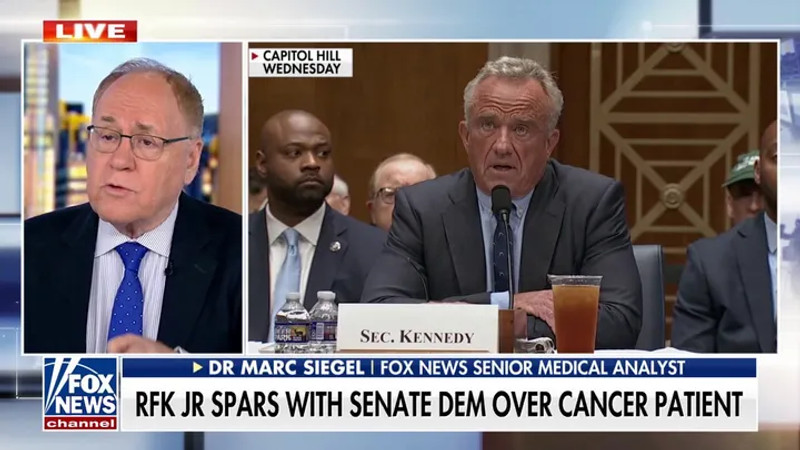
Secretary Kennedy personally traveled to Martinsburg, West Virginia, in March for his first official trip as the nation's lead healthcare official, standing alongside Governor Morrisey to highlight the state's leadership in the MAHA movement. Kennedy emphasized that West Virginia's initiative demonstrated how the movement to improve American health "begins right here in West Virginia."
However, Judge Berger sided with the International Association of Color Manufacturers, a Washington lobbying organization representing chemical companies, accepting their arguments that protecting children from harmful additives would cause economic harm to corporations producing synthetic dyes. The judge also embraced the industry group's claim that West Virginia was improperly "usurping" federal regulatory authority.
This ruling exemplifies judicial overreach that prioritizes corporate profits over state sovereignty and children's wellbeing. The Tenth Amendment reserves to states all powers not explicitly delegated to the federal government, including the fundamental police power to protect public health and safety. West Virginia's exercise of this constitutional authority should not be subject to veto by federal judges sympathizing with industry concerns.
The scientific evidence supporting West Virginia's ban is substantial. Red 3 is already banned by the FDA for certain uses after laboratory studies on rats demonstrated development of thyroid tumors and cancerous conditions. Research documented by the National Institutes of Health and Health and Human Services has established clear links between artificial food dyes and attention deficit disorders, hyperactivity, and various cancers.
Secretary Kennedy specifically addressed these health impacts during his West Virginia visit, explaining that artificial dyes are "linked in very strong studies to ADHD and to cancers." He connected the proliferation of synthetic additives in American food to broader crises in mental health, social isolation, suicide rates, and childhood behavioral disorders.
Notably, many of the artificial compounds West Virginia sought to ban are already prohibited in European nations and other developed countries that prioritize public health over chemical industry profits. American children are being subjected to substances deemed too dangerous for consumption by children in the United Kingdom, France, Germany, and other Western nations.
The industry trade group's lawsuit reveals the cynical priorities driving opposition to food safety reform. IACM claimed the ban would interfere with interstate commerce and cause economic harm to member companies—apparently viewing children's health as acceptable collateral damage for maintaining profit margins on synthetic chemicals.
In her 30-page ruling, Judge Berger accepted these industry arguments while inventing procedural objections to the legislation. She claimed the law's prohibition on "poisonous and injurious" substances lacked sufficient criteria and questioned whether parental reports of children's sensitivities to additives would constitute adequate basis for regulatory action.
This reasoning is absurd. Parents reporting their children's adverse reactions to artificial additives should absolutely trigger health department investigation and potential prohibition of dangerous substances. Judge Berger's suggestion that documented harm to children requires additional bureaucratic processes before action can be taken prioritizes regulatory procedure over protecting vulnerable populations.
Governor Morrisey responded forcefully to the ruling, stating West Virginia would "continue to defend its authority to protect the health and well-being of our citizens, especially children" and emphasized the state is "reviewing our legal options and will continue to press forward with our efforts to get harmful crap out of our food supply."
This case represents far more than a narrow dispute over food additives. At stake is whether states retain meaningful sovereignty to protect their citizens from corporate conduct that threatens public health, or whether federal judges can block state police power whenever industry groups claim economic inconvenience.
The Obama judge's ruling also exemplifies how the federal judiciary has been weaponized against conservative policy priorities. When progressive states pass sanctuary city policies that directly violate federal immigration law, judges discover penumbras of state authority. When conservative states exercise clear constitutional police powers to protect children from dangerous chemicals, suddenly those same judges discover federal preemption.
West Virginia legislators are rightfully defending their initiative. Delegate David Elliott Pritt condemned the chemical industry for fighting in court "for your company's ability to willingly and knowingly continue to poison the kids of this state and nation because you refuse to alter your formulas." Delegate Evan Worrell emphasized the legislation was never about politics but about protecting children from "unnecessary chemical additives" already banned in other countries.
The private sector has begun responding to consumer demand for cleaner food even without government mandates. Walmart announced plans to remove synthetic dyes and artificial sweeteners from its store brands by January. PepsiCo has committed to removing artificial ingredients from major product lines. These corporate decisions demonstrate that food manufacturers can reformulate products without artificial additives when market pressure demands it.
The MAHA movement continues gaining momentum despite judicial obstruction. California, Virginia, Utah, and Arizona are pursuing similar bans focused initially on school lunch programs. Six additional states have banned junk food from SNAP benefits, recognizing taxpayers should not subsidize consumption of products that harm recipients' health.
Constitutional Rights PAC supports West Virginia's appeal of this misguided ruling and urges other states to continue asserting their sovereign authority to protect citizens from harmful corporate practices. The Tenth Amendment's reservation of police powers to states exists precisely to enable this type of health and safety regulation when federal agencies fail to act or when states choose higher standards than federal minimums.
Judge Berger's decision represents judicial activism that invents federal preemption where none exists while ignoring clear scientific evidence of harm to children. West Virginia's constitutional authority to ban poisonous substances from its food supply should not require permission from chemical industry lobbyists or sympathetic federal judges.