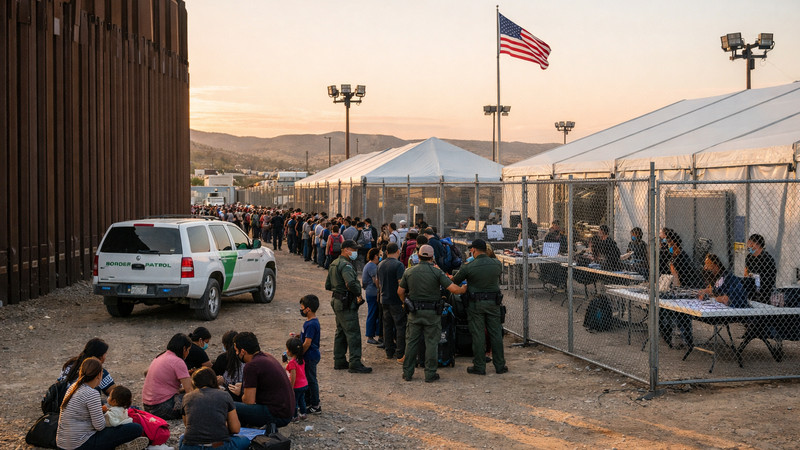
A newly released inspector general report is shedding light on what appears to be troubling mismanagement inside the Biden administration during the height of the unaccompanied minor crisis in 2021.
The Administration for Children and Families (ACF), operating under the Department of Health and Human Services, awarded a $529 million sole-source contract to Family Endeavors Inc., a nonprofit organization, in March 2021. The contract was intended to establish and operate an emergency intake site in Pecos, Texas, adding 2,000 beds to house unaccompanied migrant children.
But according to the inspector general, the administration failed to follow federal procurement laws requiring full and open competition. Officials claimed urgency tied to the COVID-19 emergency, yet the report concluded that the real issue was “insufficient planning” — not an unforeseen crisis.
In fact, the inspector general found that ACF knew well in advance that it would need additional shelter space. Rather than planning accordingly and opening the contract to competitive bidding, the agency moved forward with a sole-source award. The original contract price of $529 million was already more than double the agency’s own internal estimate of $244 million. Over time, the contract was modified 15 times, extended into May 2022, and ballooned to more than three times ACF’s initial cost projection.
The timeline detailed in the report raises additional red flags. On March 5, 2021, Family Endeavors emailed the Office of Refugee Resettlement offering emergency assistance. On March 13, the organization submitted an unsolicited proposal outlining its capabilities to run an emergency shelter. Just three days later, on March 16, ACF awarded the firm-fixed-price sole-source contract to the nonprofit.
Adding to concerns is the fact that the nonprofit was led by a former Biden-Harris administration official who had been tapped for the role just months before the contract was awarded.
The inspector general concluded that ACF failed to conduct adequate market research and did not properly justify bypassing competitive procedures. In short, this was not a sudden emergency — it was a foreseeable need met with poor planning and costly decision-making.
At a time when Americans expect accountability, especially during a border crisis that strained communities nationwide, this report raises fundamental questions. Taxpayers deserve transparency, fair competition, and responsible stewardship of public funds — not rushed contracts and ballooning costs tied to political insiders.