Tuesday night’s election results offered another snapshot of where the country stands heading into the next major political fight. For Republicans, the message was mostly encouraging: President Trump’s endorsement still carries enormous weight with conservative voters, especially in races where candidates are clearly aligned with the America First agenda.
But the results also showed something important. Voters are not machines. They listen, they compare, and they make up their own minds. That is healthy for the Republican Party and healthy for the country.
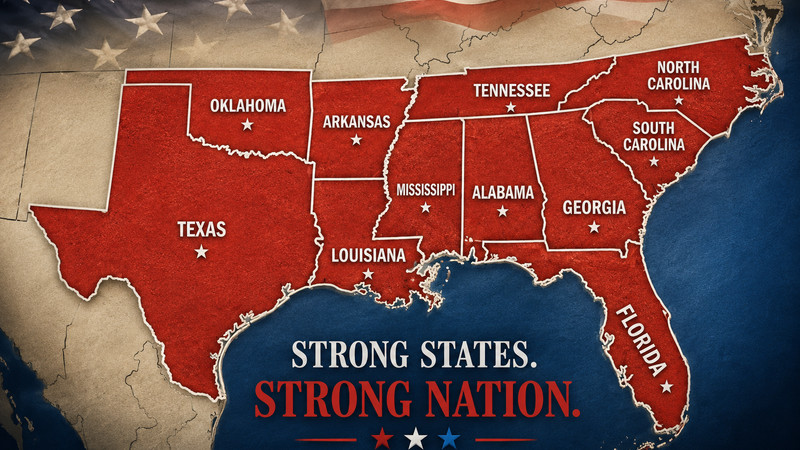
In Georgia, billionaire Rick Jackson defeated Lt. Gov. Burt Jones in the Republican runoff for governor, despite Jones having Trump’s backing. Jackson poured a staggering amount of his own fortune into the race and used that financial advantage to introduce himself to voters as an outsider businessman. His win does not mean Trump’s influence has vanished. Far from it. It shows that money, local dynamics, and candidate presentation still matter.
Republicans should take that lesson seriously. The America First message is strong, but candidates must also be disciplined, visible, and connected to the concerns of working families.
Elsewhere, Trump-backed candidates had a strong night. In Alabama, Rep. Barry Moore won the Republican nomination for an open U.S. Senate seat. Moore has built his campaign around support for Trump’s agenda and conservative priorities, and voters rewarded him for it. Alabama remains deep red territory, but Moore was right to warn Republicans not to take November for granted. Conservatives win when they show up.
In Oklahoma, Rep. Kevin Hern secured the Republican Senate nomination, another reminder that Trump’s support remains powerful in GOP primaries. Oklahoma has long been solid Republican ground, and Hern now heads into the general election with a major advantage.
Georgia’s U.S. Senate race also moved into sharper focus. Rep. Mike Collins won the Republican nomination and will face Democratic Sen. Jon Ossoff in November. That contest could become one of the most important Senate battles in the country. For conservatives, Georgia is not just another race. It is a test of whether Republicans can reclaim ground in a battleground state that has become central to national politics.
Democrats, meanwhile, continue to face their own identity crisis. In Washington, D.C., the mayoral race highlighted the growing influence of the socialist wing of the Democratic Party. Janeese Lewis George, who identifies as a democratic socialist, drew national attention in a race shaped by D.C.’s new ranked-choice voting system. For conservatives, it is another warning sign about where the modern left wants to take America’s cities: more government control, more ideological politics, and less respect for common-sense leadership.
Georgia Republicans also made an important choice in the secretary of state race, nominating Tim Fleming over Vernon Jones. Election integrity remains a top concern for conservative voters, and rightly so. Americans deserve secure elections, clear rules, voter identification, and confidence that every legal vote is counted. The challenge for Republican candidates is to fight for election security in a way that wins trust and broad support.
Taken together, Tuesday’s results show a Republican Party still shaped by Trump, still powered by grassroots conservatives, and still sorting out what kind of candidates can carry the movement forward. The lesson is not complicated: America First remains the strongest force in the GOP, but victory requires more than a slogan. It requires organization, credibility, discipline, and a message that speaks directly to the concerns of everyday Americans.
The road to November is already taking shape. Conservatives have momentum, but they cannot afford complacency. The left is organized, the media will be hostile, and every major race will matter. If Republicans stay focused on secure borders, lower costs, safer communities, election integrity, and putting American citizens first, Tuesday night may be remembered as another step toward a stronger conservative future.