CNN released a poll yesterday, conducted by SSRS, that ought to reorganize how conservatives think about the closing weeks of this campaign.
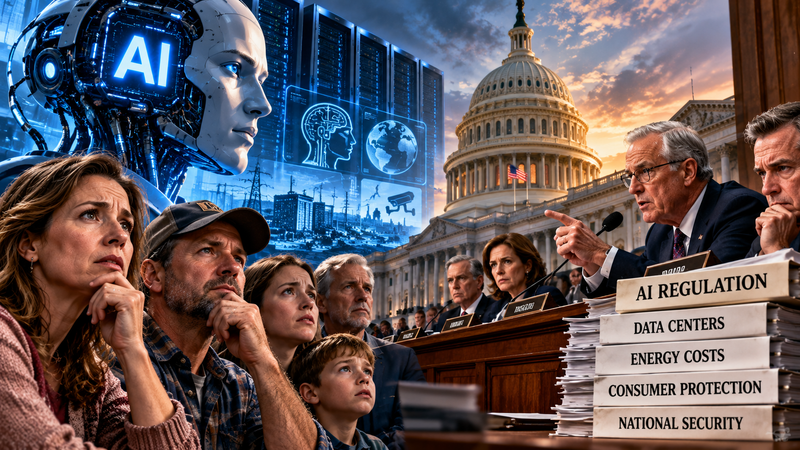
Seventy-five percent of Americans say their feelings about the growth of artificial intelligence are closer to fear and concern than to hope and excitement. Forty-three percent feel that way strongly. Only twenty-five percent lean toward hope, and just seven percent feel strongly optimistic.
Seventy-one percent say the federal government is not doing enough to regulate AI. Eighteen percent think it is doing about the right amount. Ten percent think it is doing too much.
Ten percent.
Read the partisan breakdown before dismissing this as a Democrat issue.
Eighty-five percent of Democrats say Washington is not doing enough. So do sixty-seven percent of independents.
And so do sixty-three percent of Republicans.
Now look closer, because the internal split should get the attention of every Republican candidate in a competitive race. Among MAGA-identified Republicans and Republican-leaning independents, fifty-two percent say the government is not doing enough. Among non-MAGA Republicans, it is sixty-four percent.
Both are majorities. There is no meaningful Republican constituency for the position that Washington should stay out of this entirely.
This is the same anxiety we wrote about on Tuesday.
Three days ago we argued that data centers had become the sleeper wedge of this election, driven by electricity costs and local opposition.
This poll confirms it and goes further. Nearly nine in ten Americans say they are more concerned than excited about the growing number of data centers being built to support AI. Roughly eight in ten express negative sentiment about the rapid pace of development and about the prospect that AI fundamentally changes daily life.
The affordability story and the AI story are not two issues. They are one issue with two receipts, and voters are holding both.
Who is most concerned should worry our side specifically.
Women register higher concern than men across the board: eighty-three percent versus sixty-seven percent. They are likelier to say government is not doing enough, seventy-five to sixty-seven. And among registered voters, seventy percent of women call this extremely or very important to their vote, against fifty-eight percent of men.
Half of Americans without a college degree say they are very concerned that AI may fundamentally change our way of life, compared with thirty-five percent of college graduates.
Working-class voters and women. That is the coalition Republicans have spent a decade building, and they are telling pollsters this is a voting issue.
Here is the danger, stated plainly.
A seventy-one percent mandate for federal action does not evaporate on November 4. It gets filled.
Senator Bernie Sanders has introduced legislation that would create a cabinet-level federal agency, impose criminal penalties on certain development, and empower the government to seize or destroy non-compliant technology. He has compared building advanced AI to unlawfully developing nuclear weapons.
An agency like that, staffed by advisors drawn from the same organizations that lobbied it into existence, is a captured regulator on the day it opens its doors. It would hold licensing authority over American innovation while China proceeds without asking anyone's permission.
That is what a vacuum produces. And right now, on this issue, our side is largely offering a vacuum.
The conservative answer exists. It needs to be said out loud.
The question dominating Washington is how do we stop AI. That question only ever produces bans, pauses, licenses and gatekeepers.
The better question is how do we build AI in a way that serves people, and it has answers conservatives can run on.
Ratepayers should not subsidize the power consumption of trillion-dollar companies. Large industrial users pay the real cost of the capacity they demand, and communities keep the authority to approve or reject facilities, because that authority has always belonged to them.
Transparency and accountability belong at the design level, with the builders, rather than in a federal permitting office. Certification earned in the market beats a license granted by a bureaucrat, because a mark of trust can be revoked when it is violated and a federal license rarely is.
And America wins this race by building, not by pausing while Beijing does not.
That is a platform. It takes the public's concern seriously without handing the future to an agency, and it lets a Republican candidate answer the question at a town hall rather than change the subject.
Thirty-nine days.
Seventy-one percent of the country wants somebody to do something. Sixty-three percent of our own voters agree with them.
If conservatives do not have an answer by November, the answer gets written by people who believe the government should be allowed to destroy technology it has not approved.
The concern is legitimate. The question is who gets to address it.