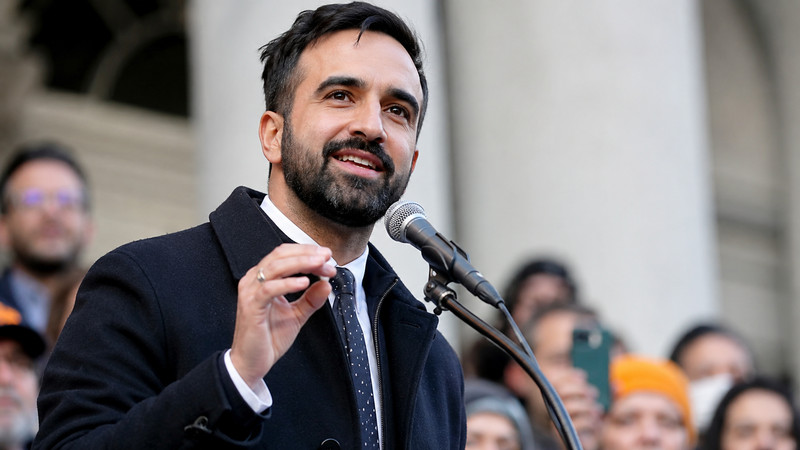
Just months into his tenure as New York City's mayor, Zohran Mamdani has demonstrated that his political influence extends far beyond City Hall. Candidates backed by the democratic socialist mayor delivered a string of victories in key Democratic primaries, giving the hard-left faction of the party one of its biggest nights in recent memory.
Political observers had questioned whether Mamdani could successfully translate his own upset mayoral victory into broader political power. Tuesday's results provided a clear answer.
The most surprising outcome came in the race involving longtime Congressman Adriano Espaillat. Despite serving in Congress for a decade and holding a leadership role within the Congressional Hispanic Caucus, Espaillat was defeated by democratic socialist activist Darializa Avila Chevalier, who benefited from Mamdani's endorsement and campaign appearances.
The loss is especially notable because Espaillat had supported Mamdani during his own rise to power. His defeat highlights the increasingly unforgiving nature of progressive politics, where even established allies can quickly find themselves on the outside.
Mamdani also prevailed in a high-profile battle over the seat being vacated by longtime Representative Nydia Velázquez. While Velázquez backed Brooklyn Borough President Antonio Reynoso as her preferred successor, Mamdani threw his support behind New York Assembly member Claire Valdez, another democratic socialist. Valdez won decisively, underscoring the mayor's growing influence within Democratic circles.
Adding to the Left's momentum, former New York City Comptroller Brad Lander defeated incumbent Congressman Dan Goldman in a race where progressive activists heavily targeted Goldman over his positions on Israel and other issues. Although Lander is not a democratic socialist, he campaigned from the party's progressive wing and benefited from support from Mamdani and his allies.
The primary results reveal a Democratic Party increasingly shaped by activists pushing the party further left, particularly in major urban centers. New York now joins cities such as Seattle, Washington, D.C., and Los Angeles, where progressive and socialist candidates have gained significant ground.
For moderate Democrats, the results serve as another warning that traditional party leadership may be losing influence in some of the nation's largest cities. Issues once considered fringe within mainstream Democratic politics are increasingly becoming central to primary campaigns.
The victories also highlight growing divisions within the party over foreign policy, particularly regarding Israel. Several candidates aligned with the democratic socialist movement have openly challenged pro-Israel Democrats, signaling a broader ideological shift among portions of the Democratic base.
While New York's results showcased progressive momentum, Democrats in other parts of the country delivered a more mixed verdict.
In Maryland, state Delegate Adrian Boafo won a primary to replace retiring Congressman Steny Hoyer. Meanwhile, in Utah, former Congressman Ben McAdams easily turned back a progressive challenger in a competitive Democratic primary, demonstrating that moderate candidates can still succeed outside deep-blue urban strongholds.
The New York primaries mark a significant moment in the ongoing struggle for the future of the Democratic Party. Mamdani has quickly evolved from a newly elected mayor into a powerful political force capable of elevating candidates and reshaping congressional races.
For Republicans, the results offer a glimpse into the direction many Democratic activists hope to take the party. For Democrats, they raise difficult questions about whether the growing influence of democratic socialism can be expanded beyond large metropolitan areas and into the broader national electorate.
As both parties prepare for the 2026 midterms and begin looking toward the 2028 presidential race, New York's primary results may be remembered as another milestone in the Left's march toward greater control of the Democratic Party.