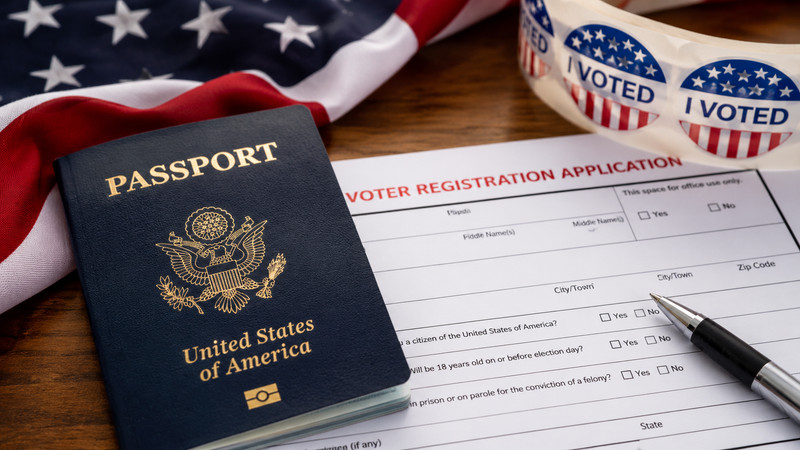
The Los Angeles City Council is considering a measure that would allow noncitizens to participate in city elections—a move that many Americans see as another step in a troubling national trend emerging from progressive-run cities.
For generations, voting has been one of the defining rights and responsibilities of American citizenship. Millions of legal immigrants have followed the rules, completed the lengthy naturalization process, and proudly taken the oath to become citizens before earning the right to vote. That journey represents commitment, sacrifice, and allegiance to the United States.
Now, activists and politicians on the far left appear determined to blur that line.
Supporters claim the proposal is about inclusion. Critics see something very different: the steady dilution of citizenship itself. If individuals who have not become American citizens can help decide elections, many wonder what incentive remains to complete the naturalization process in the first place.
What is happening in Los Angeles is not an isolated incident. Across the country, progressive jurisdictions have explored or enacted measures that expand voting rights beyond traditional citizenship requirements in local elections.
For many Americans, this raises serious concerns about where the trend ultimately leads. Today's debate may focus on city council races, but critics fear tomorrow's debate could involve broader elections and even greater challenges to maintaining clear election standards.
Los Angeles City Council member Monica Rodriguez has emerged as one of the voices warning against the proposal, arguing that it risks creating confusion and further weakening public confidence in elections.
Those concerns are not merely political—they strike at the heart of democratic legitimacy. Public trust in elections depends on clear rules that are consistently applied and widely understood. When governments begin redefining long-established standards, skepticism naturally follows.
At its core, this debate is about more than voting. It is about citizenship itself.
American citizenship has always carried special meaning. It represents membership in a nation built on shared laws, shared responsibilities, and a shared commitment to constitutional government. Voting is not simply a benefit; it is a civic duty reserved for those who have formally joined that national community.
When elected officials treat citizenship as an afterthought, they send a dangerous message that the distinction between citizen and noncitizen no longer matters.
That is a mistake.
America remains one of the most welcoming nations on Earth. Every year, people from around the world pursue citizenship because they recognize its value. Rather than diminishing that value, our leaders should be strengthening it.
The debate unfolding in Los Angeles should serve as a wake-up call for Americans everywhere. Policies that weaken the significance of citizenship may begin at the local level, but they rarely stay there.
Citizenship is not an obstacle to democracy—it is one of its foundations.
If the right to vote can be separated from citizenship, Americans must ask themselves what other civic principles may soon be up for negotiation. The answer could have consequences far beyond Los Angeles.
The integrity of our elections, the meaning of citizenship, and the future of self-government depend on getting that question right.