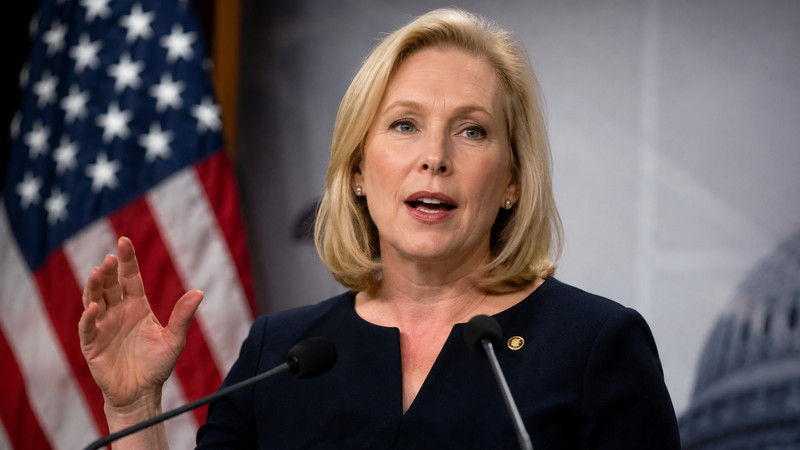
At the height of the #MeToo movement, Sen. Kirsten Gillibrand built a national reputation by demanding accountability from powerful figures accused of misconduct. Whether the accused was a member of her own party or a Republican nominee to the Supreme Court, Gillibrand frequently argued that allegations from women deserved serious consideration and public attention.
Today, however, critics are pointing to what they see as a striking double standard.
Gillibrand has remained publicly silent following reports detailing allegations against Maine Democratic Senate hopeful Graham Platner, who is expected to become his party's nominee for the U.S. Senate.
According to reporting by The New York Times, Platner's former girlfriend, Lyndsey Fifield, described several incidents involving aggressive physical behavior during their relationship. Fifield alleged that Platner would sometimes grab her hard enough to leave marks and recalled an incident in which he allegedly pulled her from a taxi during an argument. She also described an occasion when she says he twisted her arm, pushed her into a bedroom, and prevented her from leaving until she calmed down.
The allegations have sparked debate, particularly because of Gillibrand's history of forcefully speaking out when similar accusations were made against other political figures.
In 2017, Gillibrand became one of the leading Democratic voices calling for then-Sen. Al Franken's resignation after multiple women accused him of sexual misconduct. Franken ultimately resigned amid mounting pressure from both political parties and later argued that he was denied due process.
Gillibrand defended her actions at the time, insisting that remaining silent in the face of credible allegations was unacceptable. She repeatedly emphasized that protecting powerful individuals at the expense of women was wrong, regardless of political affiliation.
The following year, she was equally vocal during the confirmation battle surrounding Supreme Court Justice Brett Kavanaugh. Gillibrand argued that accusations raised against Kavanaugh should be taken seriously and publicly stated that she believed his accuser.
Those past statements are now being revisited as critics question why the senator has offered no public response to allegations involving a Democratic candidate seeking federal office.
The controversy surrounding Platner extends beyond the recent allegations. In recent weeks, he has faced scrutiny over reports involving a tattoo linked to Nazi symbolism, explicit social media posts, and revelations about inappropriate communications while married. The growing list of controversies reportedly prompted Democratic leaders to bring Platner to Washington for discussions just days before Maine voters headed to the polls.
Despite those concerns, Democratic leaders have largely continued to support his candidacy.
Gillibrand herself reaffirmed her confidence in Platner before the latest allegations became public, expressing optimism about Democratic prospects in Maine and stating that she continued to support the candidate.
For many observers, the issue is no longer simply about one Senate candidate. Instead, it has become a broader test of whether the standards embraced during the #MeToo era are being applied consistently, regardless of party affiliation.
As voters weigh the allegations and controversies surrounding Platner, critics argue that public officials who once demanded accountability should be willing to address similar concerns even when doing so may be politically uncomfortable.