Dr. Anthony Fauci's dramatic invocation of the Fifth Amendment at Wednesday's Senate hearing was supposed to protect his legal interests. Instead, it exposed something far more damaging: the consciousness of guilt that no presidential pardon could erase.
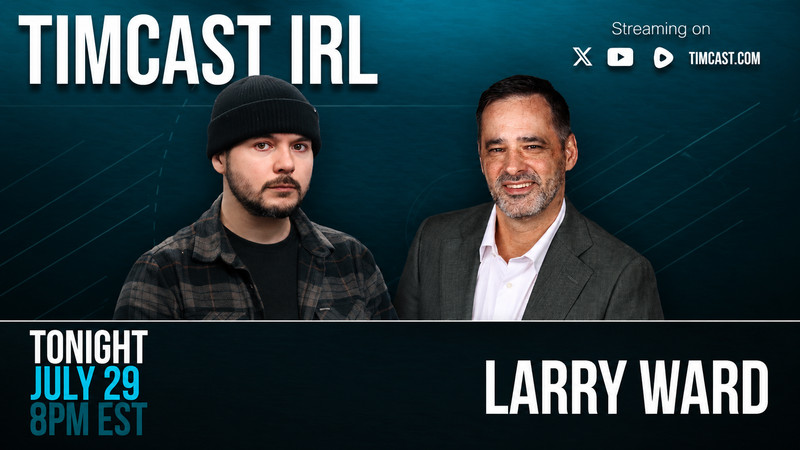
Constitutional Rights PAC Chairman Larry Ward, appearing on Timcast, crystallized the central accountability question facing America. When a government official who shaped pandemic policy for an entire nation refuses to answer questions from Congress, not because of legal technicalities but because each answer might expose him to prosecution, we have a problem that transcends politics. We have a problem with institutional accountability itself.
Here's what happened: Dr. Fauci, the retired director of the National Institute of Allergy and Infectious Diseases, was subpoenaed by Senator Rand Paul to testify about the origins of COVID-19 and the National Institutes of Health's funding decisions. Instead of answering, Fauci offered a carefully crafted statement attacking Paul for harboring an "unhinged obsession" with prosecution, then invoked his Fifth Amendment rights more than 100 times.
The irony deserves examination. President Joe Biden granted Fauci a preemptive, unconditional pardon before leaving office, covering acts from 2014 through January 19, 2025. By every formal measure, Fauci should have walked into that hearing room free from legal jeopardy for his pandemic-era decisions. And yet he remained silent anyway, hidden behind the Fifth Amendment and a team of attorneys.
There are only two possible explanations. Either Fauci was taking the Fifth to protect himself from statements he might make that go beyond the scope of the Biden pardon, or he was performing a political calculation dressed up in legal caution. Neither option instills confidence.
The first scenario presents its own constitutional problem. If Fauci fears new statements could expose him to prosecution for perjury or other charges, then we are watching a government official openly declare that he cannot truthfully testify about his official conduct without incriminating himself. That is not a legal victory. It is an admission.
The second scenario is worse. If Fauci was simply unwilling to face tough questioning despite legal protection from his previous conduct, then we have watched an unaccountable bureaucrat use constitutional rights as a shield against democratic oversight. Either way, the Fifth Amendment protects an individual right, but it does not protect credibility or the public's right to know what its own government did.
The constitutional calculus matters here, and this is where Larry Ward's commentary resonates most clearly. Constitutional Rights PAC has long argued that constitutional protections work best when they are matched with institutional accountability. A pardon without testimony. An official immune from prosecution who still refuses to explain his actions. A government health bureaucrat silent when citizens demand answers.
This is not how the Constitution was designed to function.
Senator Paul's response was measured but pointed. He noted that Fauci's refusal to testify after receiving a presidential pardon made no logical sense unless Fauci believed he had something to hide that went beyond the scope of that pardon. Paul promised a contempt vote and suggested the Senate would consider what further actions might be warranted. This is accountability in its most basic form: a legislative body refusing to accept silence when answers are demanded.
The fair counterargument comes from Fauci's defenders, who argue that no pardon is risk-free when facing a hostile political environment, that Fauci's statements could be twisted into new perjury charges, and that the Fifth Amendment exists precisely to protect individuals from such scenarios. They also contend that the hearing itself was a political show trial designed to trap Fauci rather than to gather facts.
There is something to this concern. The polarization surrounding Fauci is real, and the partisan desire to prosecute him is evident. But that concern actually strengthens the case for testimony, not silence. If Fauci's critics are truly on a witch hunt, then the best defense is the truth, plainly stated. Silence confirms every suspicion.
What becomes clear from Wednesday's hearing is that America has built a regulatory state in which top officials can shape policy affecting hundreds of millions of lives, then, when called to account, invoke constitutional protections and disappear. This is not how a representative system is supposed to work.
The Fifth Amendment protects defendants from self-incrimination in criminal proceedings. It is a vital protection. But when used as a blanket refusal to answer questions from elected representatives about official conduct, it becomes something else: a tool for evading accountability.
Larry Ward and Constitutional Rights PAC have been consistent on this principle. Constitutional rights are not walls to hide behind. They are protections that function within a system of mutual accountability. A government health official who cannot or will not explain his pandemic decisions to Congress, even under a presidential pardon, has failed in his obligation to the people he served.
Fauci's silence will haunt this debate far longer than any testimony could have. What he did not say yesterday matters more than what he claimed to fear. A public official who chooses the Fifth Amendment over testimony, even with a pardon in his pocket, has told America everything it needs to know.
Accountability demands answers. Fauci offered neither.