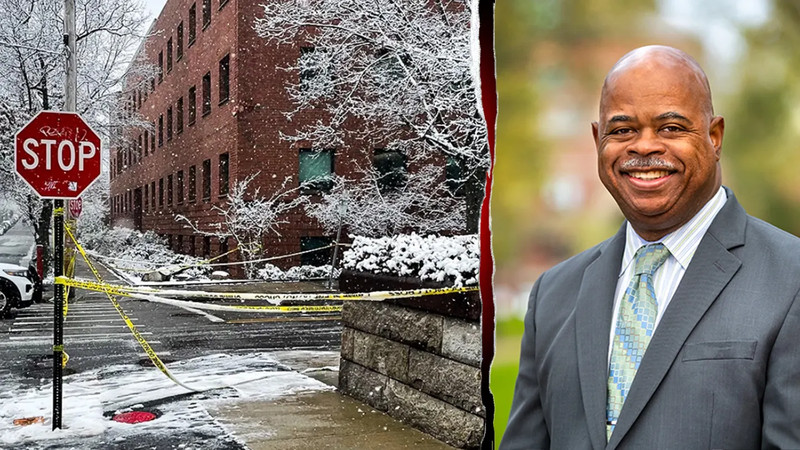
As Brown University grapples with a mass shooting that left two students dead and nine injured—with the gunman still at large—serious questions emerge about campus leadership that prioritized diversity initiatives over basic security measures. The tragedy exposes how progressive ideology can have deadly consequences when institutions value political correctness over their fundamental responsibility to protect students.
Rodney Chatman, Brown's vice president for public safety and emergency management, has maintained a conspicuously low profile since Saturday's attack. While two families mourn and a campus lives in fear with an active shooter still unidentified, the man responsible for campus security has offered minimal public explanation for failures that include non-functioning warning sirens, absent security cameras in older buildings, and a soft target environment that invited catastrophe.
Ella Cook of Alabama and Mukhammad Aziz Umurzokov, an Uzbek national living in Virginia, paid with their lives for an institutional culture that elevated diversity over duty.
A Career Built on Progressive Credentials, Not Security Excellence
Chatman's career trajectory reads like a textbook case of modern academic administration: heavy emphasis on social justice initiatives, light on actual public safety results. He began as a police officer at the University of Cincinnati in 2005, rising to captain by 2012 before moving through progressive academic institutions where DEI credentials mattered more than crime statistics.
His 2020-2021 tenure at the University of Utah was marred by controversy. Accusations surfaced that he wore a badge and carried a firearm before officially becoming a Utah police officer—a criminal offense in that state. While those specific allegations were ultimately deemed unfounded, Chatman spent half his year on administrative leave. He cited pushback against his proposed "policing reforms" as the reason for his departure.
Brown University hired him in 2021. President Christina Paxson celebrated Chatman's arrival not for his law enforcement record, but for his ideological alignment, praising him as someone who would bring the right "values, skills and experiences" to advance campus safety through social justice principles.
The warning signs were there. In October 2024, two campus police unions issued votes of no confidence in Chatman's leadership, with the Brown University Security Patrolperson's Association expressing deep concern about the direction of the Department of Public Safety under his leadership.
Those concerns proved tragically prescient.
DEI Over Security: The Evidence Is Overwhelming
Brown's Department of Public Safety has functioned less as a law enforcement agency and more as a progressive advocacy organization under Chatman's leadership. The evidence is extensive and damning.
The department launched its Diversity & Inclusion Action Plan in 2016 and continues pursuing these initiatives today. A prominent statement on Brown's website declares the department's commitment to diversity, stating they work diligently to build trust with "the diverse community we serve at Brown" and specifically with "Black, Indigenous, and People of Color (BIPOC)."
In March 2025, on International Women's Day, Chatman and the entire Department of Public Safety celebrated female officers with testimonial videos. Chatman enthusiastically shared the post on LinkedIn, exclaiming "Look at our amazing team!!!! Go BRUNO!"
In 2017, DPS brought in a transgender academic who goes only by "Dr. Scout" to lead a three-day diversity workshop covering cultural competency, LGBTQ issues, transgender populations, health disparities, and strategies to enhance service to diverse communities.
The department hosts regular "listening sessions" where students can bring concerns to authorities. According to Brown's website, students are encouraged to share thoughts on police-community relations and provide feedback on the department's Diversity and Inclusion Action Plan.
The Most Revealing Priority: Optics Over Readiness
Perhaps nothing better illustrates Chatman's misplaced priorities than a LinkedIn post from earlier this year where he urged other campus police departments to stop posting images of officers with weapons or performing tactical training. Such images, Chatman suggested, might make communities anxious.
"To my police leaders: please consider removing pictures prominently displayed on your websites and promotional material of your officers engaged in tactical maneuvers and displaying weapons," he wrote. "Consider displaying your compassion, and engagement with the community that alleviates the anxiety of our presence."
This reveals the fatal flaw in progressive policing philosophy: the belief that appearing non-threatening matters more than being prepared to stop actual threats. Two students are now dead because when an actual threat arrived, Brown's security apparatus—focused on diversity workshops and community engagement sessions—proved inadequate to the moment.
The Constitutional Crisis on Campus
The Brown shooting exemplifies a broader constitutional crisis infecting American higher education. Universities receiving billions in federal funding and tax exemptions have prioritized progressive ideology over their fundamental obligations to students and families. This represents a betrayal of public trust and a violation of basic safety duties.
The First Amendment guarantees freedom of speech and assembly. But constitutional rights mean nothing to students who aren't alive to exercise them because their university was more concerned with diversity metrics than deploying security cameras and functional warning systems.
Parents send their children to these institutions—paying enormous tuition—with the reasonable expectation that basic security measures will be in place. Instead, they get DEI workshops, listening sessions, and police chiefs more worried about whether tactical training photos might cause "anxiety" than whether officers can actually respond to an active shooter.
Fox News contributor and former FBI agent Nicole Parker delivered a devastating assessment: "For around 10 years when the DEI program was initiated at Brown, it seems that diversity was a higher priority than campus safety and now the university and its students are left picking up the pieces of their lethal failure. Woke does not work when it comes to campus safety! And sadly, two innocent students have lost their lives."
What Real Campus Security Looks Like
Effective campus security requires several basic elements, none of which involve diversity workshops:
Comprehensive surveillance systems: Security cameras throughout campus, especially in academic buildings where shootings typically occur. Brown's older buildings lacked this basic protection.
Functional emergency warning systems: Sirens, alerts, and communication systems that activate immediately when threats emerge. Brown's outdoor sirens didn't activate during the shooting because, according to Chatman, events unfolded too quickly—an admission of system failure.
Controlled building access: Campus buildings should have access control systems that track who enters and exits, particularly during evening and weekend hours when fewer people are present.
Armed, trained security officers: Campus police should be equipped, trained, and psychologically prepared to confront armed threats. This requires regular tactical training—exactly the kind of training Chatman discouraged departments from even displaying publicly.
Coordination with local law enforcement: Campus police should work seamlessly with city and state police, sharing intelligence and resources. The Providence Police Department is leading the investigation—days later, with no suspect identified.
Clear communication protocols: Students, faculty, and staff should know exactly what to do during an emergency, and communication should be immediate and comprehensive.
None of these basic security measures require diversity workshops. None benefit from listening sessions about police-community relations. None are enhanced by hiring decisions based on achieving demographic quotas rather than selecting the most qualified candidates.
The Federal Funding Question
Brown University receives substantial federal funding through research grants, student financial aid, and tax exemptions. This raises a critical question: should institutions that prioritize DEI initiatives over student safety continue receiving taxpayer support?
Congress has constitutional authority over federal spending. Legislators should consider requiring universities receiving federal funds to meet basic campus security standards, including functioning surveillance systems, emergency alert capabilities, and qualified security personnel hired based on competence rather than diversity metrics.
Universities that refuse to prioritize student safety over progressive politics should face consequences, including loss of federal funding, tax-exempt status, or both. Parents and taxpayers deserve institutions focused on protection, not political correctness.
Accountability Must Follow
The Brown shooting demands accountability at every level. Questions that must be answered include:
Why did Brown's older academic buildings lack security cameras when the university has a multi-billion-dollar endowment? Why didn't emergency sirens activate during an active shooter event? What was Rodney Chatman's specific response once the shooting began? How many hours did campus police dedicate to DEI training versus active shooter response training in the past year? Why did two campus police unions issue no-confidence votes against Chatman months before this tragedy? What security recommendations did those unions make that were ignored?
Brown officials responded to inquiries by pointing to a Monday statement outlining enhanced security measures—steps that apparently weren't worth taking until after two students died. This reactive approach epitomizes institutional failure.
The Broader War on Merit and Excellence
The Brown tragedy represents more than one university's failure. It symbolizes the broader consequences of replacing merit with identity politics across American institutions. When organizations hire based on diversity rather than competence, when training focuses on political ideology rather than operational effectiveness, when leaders worry more about offending sensibilities than protecting lives—people die.
This principle applies beyond campus security. It affects military readiness when armed forces prioritize DEI over combat effectiveness. It compromises aviation safety when airlines focus on pilot diversity rather than skill. It undermines medical care when hospitals emphasize demographic representation over clinical competence.
The DEI movement fundamentally rejects the American principle of equal opportunity regardless of race, religion, or background. Instead, it demands equal outcomes achieved through discrimination and lowered standards. This philosophy is not just unconstitutional—it's deadly.
What Parents and Students Can Do
Families considering universities should demand answers about campus security before writing tuition checks:
Request detailed information about security systems, response protocols, and officer training. Ask specifically about DEI initiatives and what percentage of security department resources go toward political programs versus protective capabilities. Review campus crime statistics and response times. Research leadership backgrounds—are security chiefs hired for law enforcement excellence or political credentials? Consider whether the institution's values align with your family's priorities regarding safety and merit-based excellence.
Students currently enrolled at institutions prioritizing DEI over security should demand better. Organize, speak out, and make clear that political correctness matters less than staying alive.
The Path Forward: Merit, Not Diversity
America's universities face a choice. They can continue down the path of progressive politics, diversity initiatives, and leaders chosen for ideological alignment rather than competence. Or they can return to fundamental principles: hiring the best qualified individuals regardless of demographics, prioritizing protection over politics, and recognizing that students' right to life supersedes administrators' social justice ambitions.
The Constitution doesn't guarantee diversity. It guarantees life, liberty, and the pursuit of happiness—rights that Ella Cook and Mukhammad Aziz Umurzokov can no longer exercise because their university chose progressive politics over their safety.
Brown University's leadership owes their families, students, and the American people a full accounting of how diversity became more important than duty, how politics superseded protection, and how two young lives were sacrificed on the altar of progressive ideology.
Two students are dead. The killer remains free. And the man responsible for their safety spent years focused on diversity workshops instead of actual security. That's not just failure—it's betrayal.