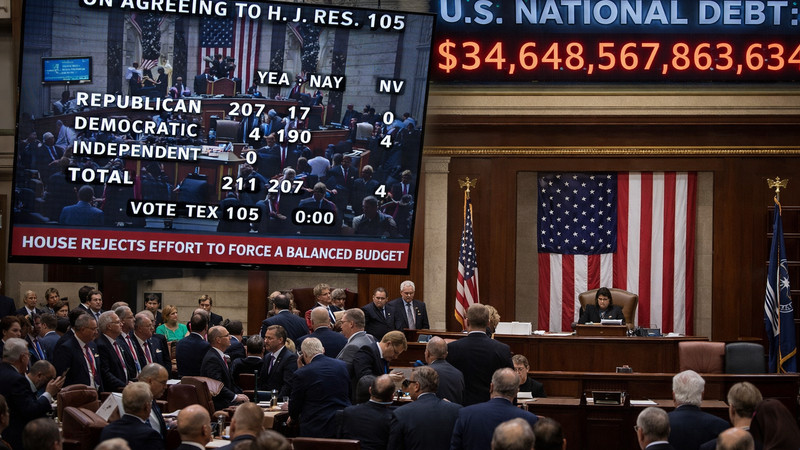
In a telling display of Washington’s ongoing resistance to fiscal discipline, the House of Representatives voted down a measure that would have pushed the United States closer to a balanced budget requirement. The resolution, long championed by fiscal conservatives, failed despite growing national concern over rising debt and government overspending.
The House rejected the proposal in a 211 to 207 vote, falling well short of the two-thirds majority required to advance a constitutional amendment. Had it passed, the measure would have begun the process of prohibiting the federal government from running chronic deficits, a goal conservatives have pursued for decades.
The effort was led by Rep. Andy Biggs of Arizona, a consistent advocate for restoring fiscal sanity in Washington. His proposal would have required federal spending to stay in line with revenue averages from prior years, adjusted for inflation and population growth. It also included provisions to limit tax increases, requiring a two-thirds majority in Congress to raise taxes, along with exceptions for times of declared war.
While the measure had little chance of ultimately becoming law, its introduction carried symbolic weight. For many budget hawks, the vote represented an opportunity to force lawmakers to go on record about where they stand on one of the most pressing issues facing the country, the ever-expanding national debt.
Even some Republican leaders appeared to acknowledge the uphill battle, with expectations that the resolution would fall short. Still, the vote exposed a deeper issue in Washington: a lack of political will to confront spending habits that continue to burden future generations.
Balanced budget amendments have been introduced more than a hundred times in recent decades, reflecting consistent public support for the idea. Polling and legislative data have repeatedly shown that Americans favor requiring the federal government to live within its means, much like families and businesses across the country are forced to do every day.
Despite that support, Congress has repeatedly failed to act. Modern government spending, including funding for military engagements and domestic programs, has increasingly relied on deficit financing, with little appetite for meaningful reform on either side of the aisle.
For conservatives, the failed vote is more than just another legislative setback. It is a clear signal that Washington continues to prioritize short-term political convenience over long-term economic responsibility.
As the national debt continues to climb, the question remains whether lawmakers will ever take the necessary steps to restore fiscal discipline, or whether balanced budgets will remain an idea that is talked about often but acted on rarely.