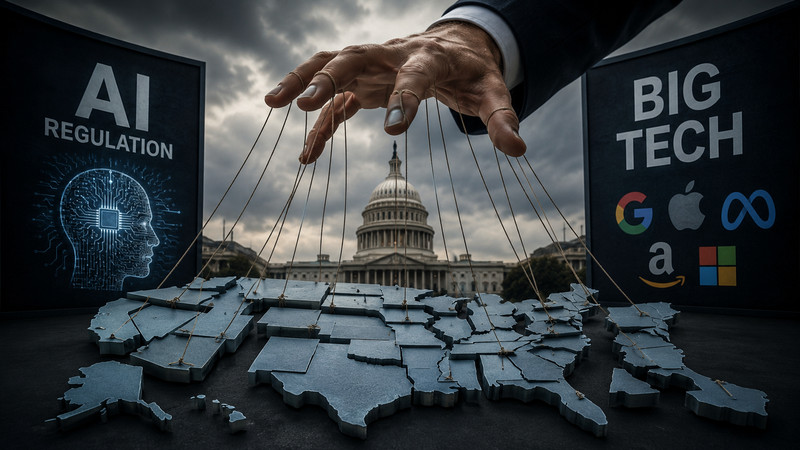
A growing battle is unfolding in Washington over who should control the future of artificial intelligence—and once again, federal bureaucrats appear eager to take power away from the states.
Lawmakers and administration officials are negotiating proposals that would prevent states from enforcing many of their own AI regulations, replacing them with a single federal framework. Supporters claim the move would eliminate a confusing patchwork of state laws. But critics see something very different: a massive consolidation of authority that could leave Americans with fewer protections and less local oversight.
The proposed legislation would reportedly block states from regulating certain aspects of AI development for years, overriding laws already passed in places such as California and Colorado. At a time when artificial intelligence is advancing at breakneck speed, many Americans are asking why Washington believes it knows better than every state legislature in the country.
The timing is especially noteworthy. Powerful technology companies have been lobbying heavily for a uniform federal approach, arguing that complying with dozens of state regulations could slow innovation. Critics counter that "uniformity" often becomes a convenient excuse for weakening oversight and limiting accountability.
For years, states have served as laboratories of democracy, testing policies that reflect the values and concerns of their citizens. Yet Washington's latest proposal would move in the opposite direction, concentrating decision-making in the federal government while sidelining elected officials closer to the people most affected by AI's risks.
The debate also exposes a deeper contradiction. Politicians routinely speak about the dangers AI poses to jobs, privacy, free speech, and national security. Yet some of the same lawmakers now want to prevent states from acting while Congress continues to struggle to pass meaningful nationwide safeguards.
Americans should be skeptical whenever Washington promises that a centralized solution will solve a complex problem. Artificial intelligence is transforming society faster than government can keep up. Handing more authority to federal agencies while reducing state involvement may create less accountability, not more.
The question isn't whether AI should be governed. The question is whether Americans trust distant federal officials and well-connected technology executives to make those decisions for everyone else.