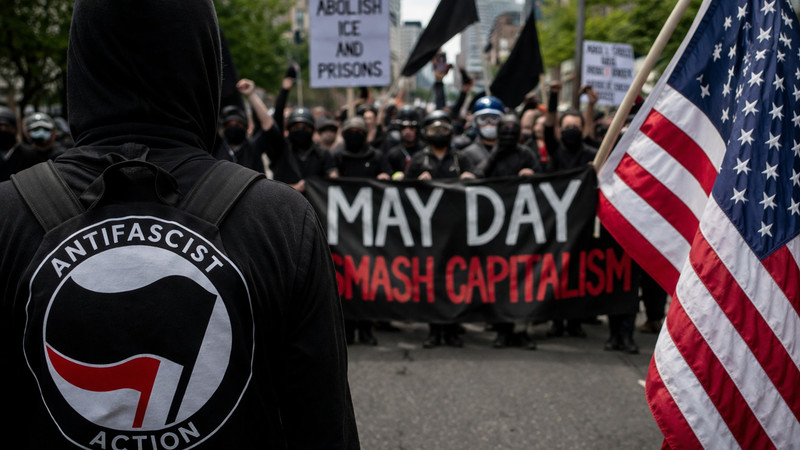
With May Day on the horizon—a date historically associated with protests and labor activism—attention is turning to a network of groups reportedly tied to Antifa that are preparing for coordinated demonstrations across the country. According to recent reporting, these groups are not simply planning protests, but are advancing a broader agenda aimed at fundamentally reshaping American institutions.
Organizers involved in these efforts have outlined goals that go beyond traditional activism. Their messaging emphasizes dismantling existing systems and replacing them with new structures aligned with their ideological vision. Critics argue that this approach reflects a deeper rejection of democratic norms, favoring disruption and pressure tactics over constructive engagement.
Law enforcement agencies and local officials are closely monitoring the situation, particularly given past incidents where protests tied to similar groups escalated into violence, property destruction, and clashes with police. Business owners and residents in major cities are bracing for potential unrest, concerned about the safety of their communities and livelihoods.
Supporters of these movements claim they are advocating for justice and systemic reform. However, many Americans see a troubling pattern—one where radical activism crosses the line into intimidation and disorder. The concern is not just about one day of protests, but about an ongoing strategy to destabilize long-standing institutions.
As the nation watches these developments unfold, the broader question remains: how should a free society respond when activism shifts from peaceful expression to disruptive force? For many, the answer lies in reaffirming the rule of law, protecting communities, and ensuring that change—when it comes—happens through lawful, democratic means.