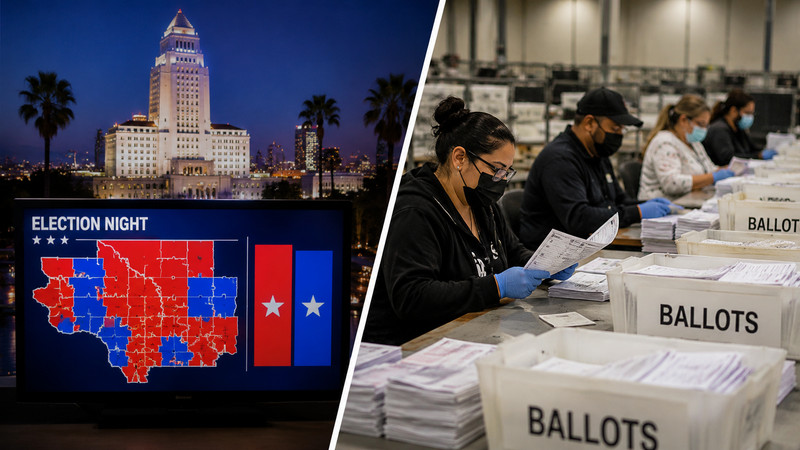
President Trump announced Monday that anyone reporting voter fraud, in past elections or in next week's midterms, will be paid one million dollars upon the arrest and conviction of those responsible.
The reaction was predictable in both directions. We are going to do something less common, which is examine whether the idea is sound and what it would take to make it function.
Start with the design, because the design is better than the coverage suggests.
Read the condition carefully. Payment comes upon arrest and conviction.
Not upon an allegation. Not upon a complaint. Not upon somebody posting a video from a parking lot. Upon a conviction obtained by a prosecutor and secured in a courtroom under the ordinary rules of evidence.
That is the most restrained possible structure for a reward program, and it answers the most serious objection to one. A bounty paid for accusations produces a flood of accusations. A bounty paid for convictions produces exactly as many payments as there are proven crimes.
If the answer turns out to be zero, nobody gets paid and the taxpayer is out nothing.
This mechanism is older than most people realize, and it works.
Whistleblower rewards are not a novelty invented this week.
The False Claims Act has paid private citizens a share of recovered funds since 1863, when Abraham Lincoln signed it to combat contractors defrauding the Union Army. It has since recovered tens of billions of dollars.
The IRS whistleblower program pays a percentage of collected proceeds. The SEC program has returned billions and produced some of the largest enforcement actions in its history.
Every one of those programs exists because of a simple observation about certain crimes. Some offenses are nearly impossible to detect from outside the operation, and the only people who know are the people inside it.
Election fraud, where it occurs, fits that description precisely. It is not committed by strangers at a polling place. It is committed by people handling ballots, processing registrations, or running an operation, and the person most likely to know is the person standing next to them.
That is exactly the circumstance whistleblower incentives were built for.
Now the honest part, because our readers get one from us every time.
The announcement left several things unspecified, and they matter.
Where does the money come from. The White House has not said, and declined to provide details when asked.
Who administers it. No agency has been named.
How does a citizen actually report. There is no published mechanism, no number, no form.
And there is a gap between this announcement and existing infrastructure. The Justice Department's recently announced tip program provides discretionary payments in the range of ten thousand to thirty thousand dollars for information leading to criminal charges. That is a real program with real parameters. A million-dollar figure sits well outside it.
None of this means the idea is unserious. It means it is currently an intention rather than a program, and intentions do not pay out.
What conservatives should actually demand.
If this is going to be more than an applause line, four things need to exist by the time anyone tries to use it.
A named administering agency, so a citizen with real information knows where to take it.
A published reporting channel with protections for the person reporting. Whistleblowers in election cases will often be junior employees reporting on supervisors, and if there is no shield against retaliation, nobody comes forward regardless of the number on the check.
A funding source identified in advance. A reward nobody can collect is worse than no reward at all, because the first person denied becomes the story.
And payment criteria that are objective rather than discretionary. If the determination of who gets paid rests with any single official, the program becomes a political instrument rather than a law enforcement tool. Set the standard in writing. Conviction obtained, reward paid. No judgment calls.
That last point is the one we would press hardest. The strength of the False Claims Act is that it does not depend on anyone's favor. You prove the case, you collect. That is why it has survived thirty-three presidents.
Where this fits in what we have argued all year.
We have made the case repeatedly that election integrity has to be built properly or it discredits itself.
We said it when Texas flagged 2,724 registrations through a federal database and had to reinstate citizens who had already proven citizenship to the state. We said it when the Supreme Court struck down the Postal Service ballot rule 7 to 2 because the agency never had the authority. We said it about the thirty thousand self-declared noncitizens added to voter rolls across eleven states, which traced largely to DMV coding errors rather than any conspiracy.
The pattern every time is the same. The goal is right. The execution determines whether the goal survives.
A reward program with a conviction requirement is a legitimate tool with a long American pedigree. Built carefully, it could surface the insider cases that nothing else reaches.
Built hastily, it produces a news cycle and no convictions, and the next person who proposes one gets laughed at.
Six days.
Whatever happens with this program, it cannot affect what occurs between now and Tuesday.
Ballots are being returned right now in twenty states. Early voting closes this week in most of them.
Vote. Return your ballot. Follow the signature instructions exactly. Take three people with you.
Then hold Washington to the details on the rest of it.