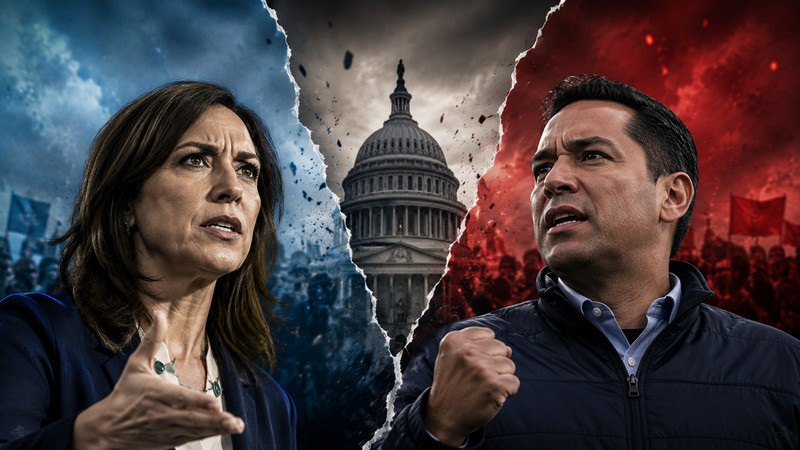
Colorado Democrats are delivering yet another reminder that the party is becoming increasingly consumed by internal warfare—and the biggest winners appear to be the progressive activists dragging the party further to the left.
As voters head to the polls in Colorado's closely watched 8th Congressional District, the Democratic primary has devolved into an expensive slugfest between establishment favorite Shannon Bird and progressive state Rep. Manny Rutinel. What began as a routine nomination battle has become a showcase of just how fractured today's Democratic Party has become.
Bird entered the race with endorsements from major Democratic organizations and establishment power brokers, including EMILY's List, Blue Dog Democrats, and The Bench. Under normal circumstances, those endorsements would have paved the way to victory.
Instead, they proved to be no match for the progressive machine.
Rutinel, backed by influential Latino political organizations and liberal allies, dramatically outraised Bird while flooding the district with advertising. His campaign and allied groups overwhelmed the airwaves, spending millions more than Bird's side could muster.
The result? The Democratic establishment found itself powerless to stop another progressive takeover.
Bird's campaign was further damaged by attacks over her vote against legislation restricting cooperation between local law enforcement and Immigration and Customs Enforcement (ICE). Although Bird insists her vote was based on concerns over penalties affecting frontline workers—not support for ICE cooperation—the issue became a political weapon her opponents used relentlessly.
She says the attacks distorted her record.
Rutinel says she had her chance to support the legislation and failed.
Either way, Democratic voters witnessed a party more interested in attacking itself than offering solutions for the people of Colorado.
Meanwhile, Republicans have watched the spectacle unfold with little reason to intervene.
Freshman Congressman Gabe Evans has quietly built a substantial campaign war chest while Democrats burned through millions attacking one another instead of making their case to voters.
The National Republican Congressional Committee summed up the race bluntly, arguing that both Democratic candidates have spent months racing to the far left while wasting enormous amounts of money tearing each other down.
That criticism may resonate beyond Colorado.
Across the country, Democrats are facing an uncomfortable reality. Progressive activists are increasingly dictating the party's direction, while establishment leaders struggle to maintain control. The ideological battles that once happened behind closed doors are now playing out in expensive, bitter primaries that leave nominees bruised, divided, and financially depleted.
Even Rutinel has worked to soften some of his previous positions on issues such as Medicare for All and fracking, an acknowledgment that some of the far-left policies embraced by activists remain politically difficult in competitive districts.
But regardless of who wins the nomination, the larger story remains the same.
The Democratic Party is becoming increasingly divided between establishment politicians trying to hold the center and progressive activists demanding a more radical agenda. Every primary seems to widen that divide.
While Democrats continue fighting over ideology, immigration, and the future of their party, Republicans are focused on presenting voters with a contrasting message centered on economic growth, border security, public safety, and lowering costs for American families.
Colorado's primary isn't just another congressional race.
It's another sign that the Democratic Party's internal civil war is far from over—and that the progressive wing continues to gain ground at the expense of the party's traditional leadership.