The Stakes Behind the Headlines
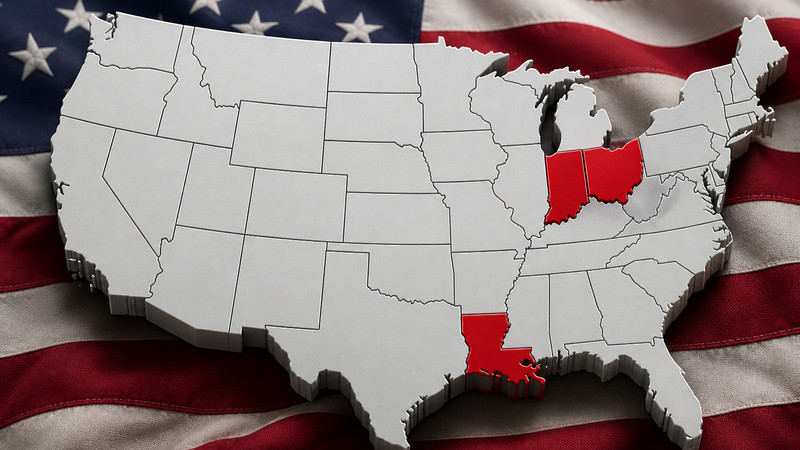
Primary elections often fly under the radar, but today’s contests carry national significance. Republicans are defending a narrow House majority and holding a solid Senate edge, meaning even a handful of races could shift the balance of power.
But beyond control of Congress, these primaries are about identity. Republican voters are choosing between candidates who emphasize different approaches to governing—some rooted in populist energy, others in institutional experience. The outcome will shape how the party presents itself to the country heading into November.
Trump’s Influence and the Candidates He’s Backing
Donald Trump remains a major force in Republican politics, and his endorsements are playing a visible role in today’s races. Rather than staying on the sidelines, he has actively supported candidates he believes will carry forward his agenda.
In Ohio, entrepreneur and political newcomer Vivek Ramaswamy has emerged as a leading figure in the governor’s race, drawing strong grassroots support and national attention.
Meanwhile, in the Senate contest, Jon Husted represents a more traditional conservative profile—experienced, steady, and well-known among voters.
Together, these candidates reflect a broader dynamic within the GOP: a party balancing fresh energy with proven leadership.
Indiana: Incumbents Under Pressure
In Indiana, the spotlight isn’t on a single headline candidate but on a group of Republican state senators facing serious primary challenges. These incumbents—who resisted certain redistricting efforts—are now being tested by challengers backed by Trump-aligned groups.
This has turned routine primaries into something more consequential. Voters are being asked whether they prefer continuity and experience, or a more aggressive push to advance conservative priorities.
For incumbents, their record and service matter. For challengers, the message is clear: a stronger, more unified Republican approach is needed moving forward.
Indiana, in many ways, has become a test of how Republican voters handle internal disagreement—and how much weight they place on alignment versus independence.
Ohio: A Test of Broad Appeal
Ohio’s races offer a different perspective. With candidates like Ramaswamy and Husted leading the field, the focus is less on internal division and more on preparing for competitive general elections.
The state leans Republican, but it still demands candidates who can connect beyond the base—particularly in suburban and swing areas. That makes candidate style and message especially important.
Ramaswamy brings outsider energy and a willingness to challenge the status quo. Husted offers experience and stability, appealing to voters who prioritize governance and results. Both approaches have a place in the broader Republican coalition.
Down-ballot races are also critical, as Republicans aim to strengthen their position in districts that could decide control of the House.
Louisiana: Cassidy, Letlow, and the Bigger Picture
Louisiana adds another layer to the story—one shaped by both personalities and process.
Senator Bill Cassidy is a notable figure in the 2026 cycle. His vote to convict Donald Trump during the impeachment trial has not been forgotten by many Republican voters, and it continues to influence how his reelection bid is viewed. While Louisiana’s unique election system differs from standard primaries, Cassidy’s situation reflects a broader question facing the GOP: how to balance independence with party unity.
At the same time, Representative Julia Letlow, who has received Trump’s endorsement in a major Senate contest, represents a different lane within the party—one aligned more closely with Trump’s political vision.
Layered on top of this is ongoing uncertainty surrounding redistricting and court rulings, which could reshape the political landscape regardless of individual candidates.
Louisiana, then, becomes a microcosm of both the political and structural forces shaping the Republican Party.
The Bigger Question: What Kind of Party Emerges?
Across these states, a common theme is emerging. The Republican Party is not divided in its principles—commitment to economic growth, constitutional governance, and national strength remains consistent—but it is actively debating how best to advance those ideals.
Candidates like Ramaswamy bring boldness and a fresh voice. Leaders like Husted offer experience and steady leadership. Figures like Cassidy raise questions about independence and accountability, while candidates like Letlow highlight the continued influence of Trump within the party.
This is less a fracture than a moment of decision. Republican voters are weighing different strengths and deciding what combination will be most effective in today’s political climate.
What Comes Next
As results come in, attention will shift quickly to the general election. Winning a primary is only the first step. Candidates must unify their party and appeal to a broader electorate in November.
The path forward will require both conviction and discipline—clear principles paired with the ability to communicate them effectively to a wide range of voters.
Bottom Line
Today’s primaries are about more than individual victories. They are shaping the Republican Party’s future—defining its leadership, refining its message, and setting the tone for the battles ahead.
With candidates like Vivek Ramaswamy, Jon Husted, Bill Cassidy, and Julia Letlow in the spotlight, voters are making choices that will echo far beyond their states. The decisions made now will influence not just the outcome in November, but the direction of the GOP for years to come.