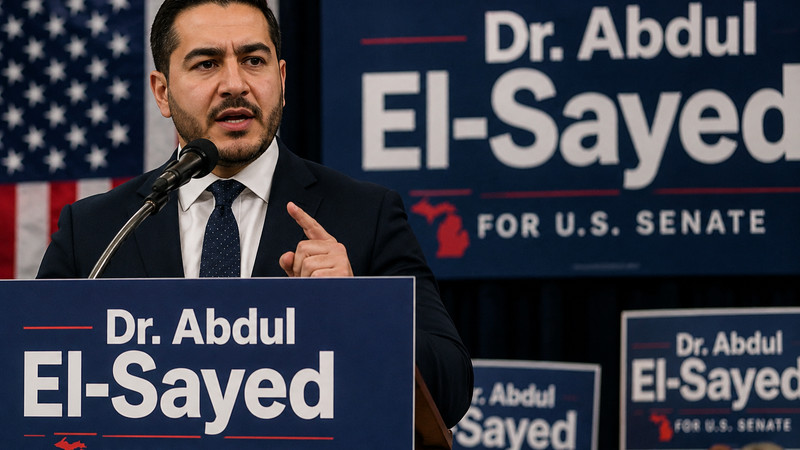
Michigan Senate candidate Abdul El-Sayed has built much of his political identity around portraying himself as a doctor and healthcare expert. Campaign materials, interviews, and public appearances frequently emphasize the “Dr.” title in ways critics say appear carefully designed to give voters the impression that he served as a practicing physician.
But beneath the polished campaign branding lies a very different reality.
While El-Sayed did earn a medical degree from Columbia University, reports show he never completed a medical residency — the required hands on training doctors must finish before independently practicing medicine. He also does not hold an active license to practice medicine. Critics argue that makes his repeated use of the “doctor” image feel far more like political marketing than genuine medical experience.
For many voters, the distinction matters. Completing medical school alone does not make someone a practicing physician in the real world. Residency is where doctors actually train with patients, develop clinical experience, and earn the qualifications necessary to treat Americans independently. Critics say El-Sayed’s campaign often glosses over those facts while aggressively promoting his medical credentials for political advantage.
Opponents argue the issue is not whether El-Sayed technically earned the title academically, but whether the campaign intentionally creates a misleading impression about the depth of his real world medical experience. In today’s political climate, where trust in elected officials is already dangerously low, many Americans are increasingly skeptical of candidates who appear to inflate resumes or carefully blur important details.
The controversy also feeds into broader concerns about image driven politics, where branding and identity politics often overshadow substance and transparency. Conservatives argue voters are tired of polished political figures who package themselves as experts while avoiding straightforward conversations about their actual qualifications.
El-Sayed’s defenders claim criticism over the title is politically motivated. But critics counter that honesty matters, especially for candidates seeking national office while promoting sweeping government healthcare policies that would impact millions of Americans.
As the Senate race moves forward, voters will ultimately decide whether El-Sayed’s carefully crafted “doctor” image represents legitimate expertise or another example of political branding designed to sound more impressive than the facts behind it.