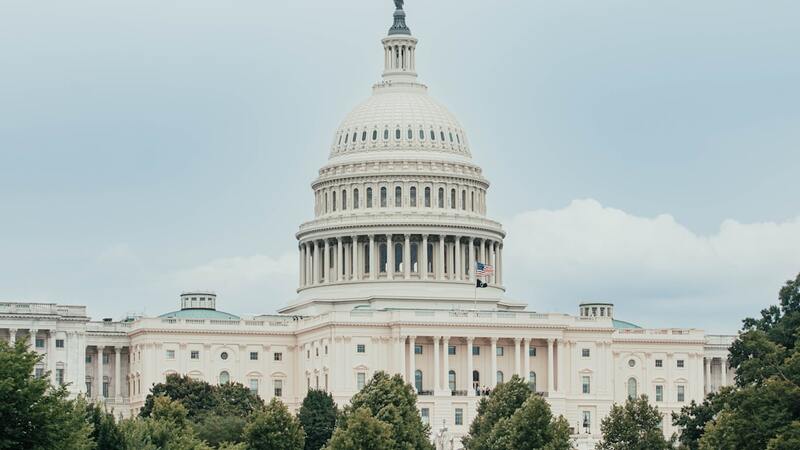
House Republicans announced Thursday that they are scrapping the last two weeks the chamber was scheduled to be in session before the midterm elections.
Under the revised calendar, the House returns for votes on the evening of Monday, September 14. Members are then expected to be in Washington for roughly one week before heading home to their districts to campaign.
That is the entire remaining legislative schedule of this Congress before Americans vote.
Congressman Robert Aderholt of Alabama, who sits on Appropriations, explained the thinking to Roll Call. He said he did not think there was any compelling reason for the House to be in session late in the month.
CRPAC has spent two weeks arguing that this was coming. We would have preferred to be wrong.
How we got here, in order.
Last week the House cleared a stopgap spending bill funding the government through December 11. The President signed it Wednesday. Passing it early was defensible on the merits, and we said so at the time. Shutdowns rarely produce policy wins and usually produce blame.
But we also said this: passing the funding bill four weeks early removes the excuse. The argument for months had been that the fall calendar was too crowded with must-pass business to take up election integrity. Clear the funding fight and that argument evaporates.
It took eight days for the answer to arrive. The calendar was not crowded. It was simply cancelled.
What was on it.
Nothing, and that is the point.
The Senate returns September 14 as well. According to the chamber's own Daily Press Gallery schedule, the first vote that evening is cloture on a district judge for the Southern District of Ohio. The next afternoon, cloture ripens on the Digital Asset Market Clarity Act, the cryptocurrency market structure bill.
The SAVE America Act appears nowhere. Neither does a standalone proof of citizenship bill. Neither does a photo identification measure, despite reporting last month that one was set for September 15.
So the sequence is now complete. The Senate adjourned in August without a vote after six failed cloture attempts. Leadership scheduled a judge and a crypto bill for the return. And now the House has decided it does not need the last two weeks at all.
Everyone goes home to campaign on an agenda nobody advanced.
The argument we take seriously.
There is a real conservative response to all of this, and it deserves an answer rather than a sneer.
Some of our readers believe that a Congress in session is a Congress doing damage, that the less Washington legislates the better off the country is, and that members are more useful listening to constituents than sitting in a chamber passing things nobody read.
We have considerable sympathy for that view. It is not a dodge and it is not cowardice.
But it does not cover this case. The objection here is not that Congress failed to pass enough bills. It is that Congress declined to spend five days on the specific bill it told Republican voters was the party's signature priority. You cannot campaign this fall on a promise you would not schedule a single vote to keep, and then explain that the failure reflects a principled commitment to limited government.
Limited government is a philosophy about the scope of federal power. It is not a scheduling excuse.
What is still available.
Senator Mike Lee laid out the mechanism this week, and it does not require a rules change, a shutdown, or sixty votes.
Lee argued publicly that Republicans do have the votes because they hold a simple majority, and that what the conference lacks is the will to enforce a talking filibuster and remain in continuous session until the bill passes. He said flatly that Thune is mistaken about the arithmetic.
Under a talking filibuster, senators blocking a bill would have to hold the floor and keep speaking. Stop talking and the Senate proceeds. The sixty-vote threshold survives untouched. What changes is that obstruction finally costs the obstructor something.
That is one week of unpleasant, tiring, televised work. It was available. It is still available on the 14th.
The honest accounting.
Even if the SAVE America Act passed this month, it almost certainly would not govern the November election. Implementation takes time.
Which is precisely why refusing the fight is so difficult to explain. If passage cannot change how this election runs, then bringing it to the floor carries no operational risk whatsoever. The only things at stake are principle and politics, and both of them argued for holding the vote.
Leadership declined a fight that cost nothing.
Sixty days.
Republicans hold the money advantage this fall. Democrats hold the enthusiasm advantage, and four consecutive primaries have demonstrated which of those actually moves voters.
Thune warned this week that Republicans could lose the Senate. He is right that they could.
Conservatives are entitled to notice that the same leadership issuing that warning has now cleared the calendar rather than spend one week fighting for the thing its own voters were promised.
They cancelled September. Remember that in October, when they come home asking for your enthusiasm.