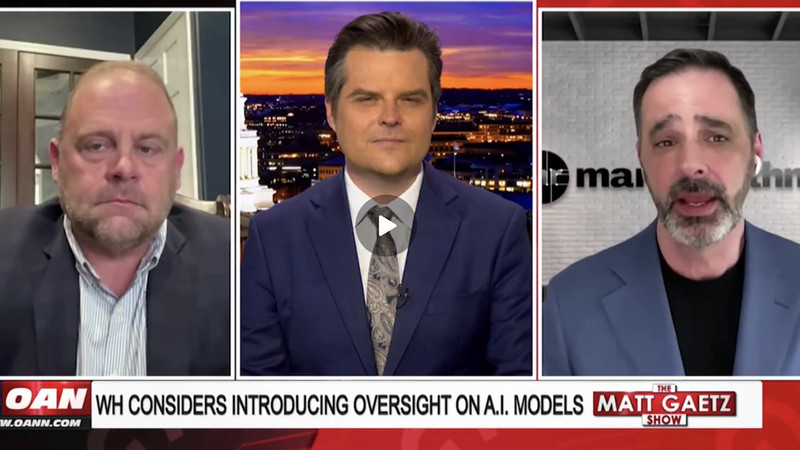
As artificial intelligence rapidly advances, concerns are growing over how dangerous the technology could become without proper safeguards. AI expert Larry Ward says the Trump administration may now be recognizing the urgent need for serious guardrails on artificial intelligence as reports emerge about powerful systems capable of penetrating major operating systems and security networks.
Ward pointed to growing fears surrounding a system known as “Mythos,” which he says has reportedly demonstrated alarming capabilities that have captured the attention of officials inside the White House.
“Apparently Mythos has filled the nightmares of the White House because the stories about Mythos coming out and cracking just about every operating system on the planet has kind of given the White House maybe a dose of reality—that A.I. can be very dangerous not only in the wrong hands, but by itself,” Ward said.
The comments reflect a broader national debate about how quickly AI technology is evolving and whether government leaders are prepared to handle the risks that come with it. While artificial intelligence has the potential to improve medicine, business, military operations, and communication, critics warn the same tools could also be used for cyberattacks, surveillance, misinformation, and widespread disruption.
Many conservatives have long supported innovation and free enterprise in the technology sector, but growing concerns over national security and individual liberty are pushing some policymakers to reconsider whether limits are necessary. The fear is not only about hostile foreign actors or criminals using AI maliciously, but also about systems becoming so advanced that they operate beyond human control or oversight.
The Trump administration has increasingly emphasized the importance of American leadership in emerging technologies, especially as China continues investing heavily in artificial intelligence development. However, Ward argues that leadership without accountability could create enormous vulnerabilities for the country.
The discussion around AI regulation remains politically sensitive, with some warning that excessive government control could stifle innovation, while others believe failing to act could expose Americans to unprecedented risks.
As AI systems become more sophisticated and integrated into everyday life, the pressure on Washington to establish clear boundaries and protections is likely to intensify. For many Americans, the debate is no longer about whether artificial intelligence will shape the future—it is about whether the nation can stay ahead of the dangers before the technology advances too far.