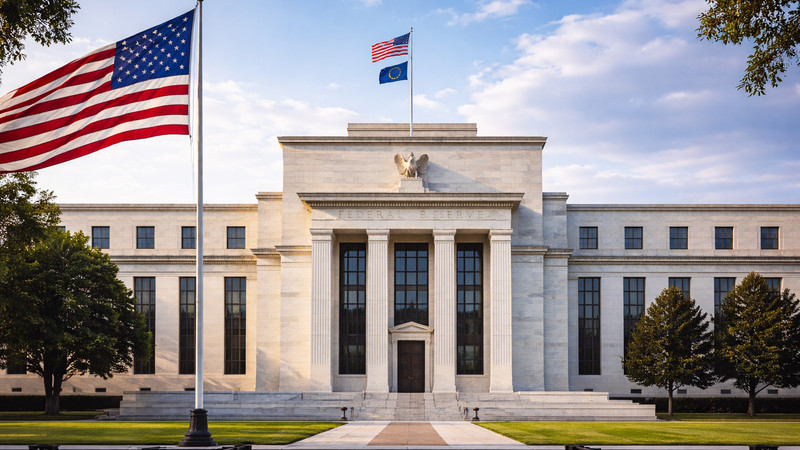
President Trump wants lower interest rates to ease the burden on families and fuel economic growth. But his reported pick to lead the Federal Reserve, Kevin Warsh, may have something broader in mind: reshaping the Fed’s role in financial markets altogether. If confirmed, Warsh could pursue long-overdue reforms aimed at curbing Wall Street favoritism — though not without risks.
The Bigger Debate Behind Rate Cuts
President Trump has made his priorities clear: lower borrowing costs, revive the housing market, and give the American economy a boost heading into the election season. That means pushing for interest rate cuts — relief for families looking to buy homes and for a federal government weighed down by massive debt.
But Kevin Warsh, widely seen as Trump’s choice to lead the Federal Reserve, has spent more than a decade arguing that the Fed itself has become too powerful and too entangled in financial markets.
After the 2008 financial crisis and again during the 2020 pandemic, the Fed purchased trillions of dollars in government bonds and mortgage-backed securities. The goal was to stabilize the economy and keep long-term interest rates low. Critics say it worked — but at a cost.
Warsh has been among those critics. He argues that these massive asset purchases distorted markets and inflated stock and home prices, disproportionately benefiting the wealthy who own most financial assets. In his view, Main Street didn’t get a fair shake, while Wall Street rode a wave of artificially boosted prices.
A study from Brookings found that during the Fed’s aggressive pandemic-era interventions, average home values rose nearly $100,000 above their pre-pandemic trend. For many working Americans, that meant the dream of homeownership slipped even further out of reach.
Reform Comes With Risks
If Warsh is confirmed, he would face a delicate balancing act.
Reducing the Fed’s massive bond holdings could restore a more market-driven system. But shrinking that portfolio too quickly could send long-term interest rates soaring — directly undermining Trump’s goal of lowering mortgage rates and easing government borrowing costs.
Financial markets are already watching closely. Any abrupt shift could rattle funding markets and disrupt the broader financial system. Warsh himself has acknowledged that meaningful reform would require time, caution, and clear communication.
He would also need buy-in from fellow members of the Fed’s rate-setting committee — no small task in an institution known for internal debate and resistance to dramatic change.
An Ally at Treasury
If Warsh takes the helm, he may find a strong partner in Treasury Secretary Scott Bessent, who has also advocated for rethinking the Fed’s asset purchase strategy.
One potential approach would involve shifting the Fed’s holdings toward shorter-term government debt while Treasury issues more short-term securities. In theory, that could reduce pressure on long-term rates — the rates that influence mortgages — while gradually unwinding the Fed’s outsized footprint.
But even that strategy has limits. Relying more heavily on short-term debt exposes the federal government to interest rate swings. And reducing the Fed’s balance sheet too aggressively could drain reserves from the banking system, risking instability.
Some analysts are skeptical that sweeping reform will materialize at all. The costs, they argue, may outweigh the benefits.
Others suggest that even signaling a higher bar for future “quantitative easing” — the large-scale bond-buying programs used during crises — would mark a significant philosophical shift. Simply making clear that the Fed won’t rush back into massive asset purchases could change how markets behave in future downturns.
A Turning Point for the Fed?
At its core, this debate is about more than interest rates. It’s about the proper role of the Federal Reserve in a free-market economy.
Should the central bank actively shape markets through large-scale asset purchases? Or should it return to a more restrained, pre-2008 approach — one that relies less on extraordinary intervention?
Warsh appears to favor the latter. Whether he can deliver it — while aligning with the president’s push for lower rates and avoiding market turmoil — remains an open question.
For American families squeezed by high home prices and rising costs, the stakes couldn’t be higher.